Stacking the Deck: How UK Punters Chain No-Deposit Perks with Odds Boosts for Steady Gains
Zoe Russell · Mar 20, 2026
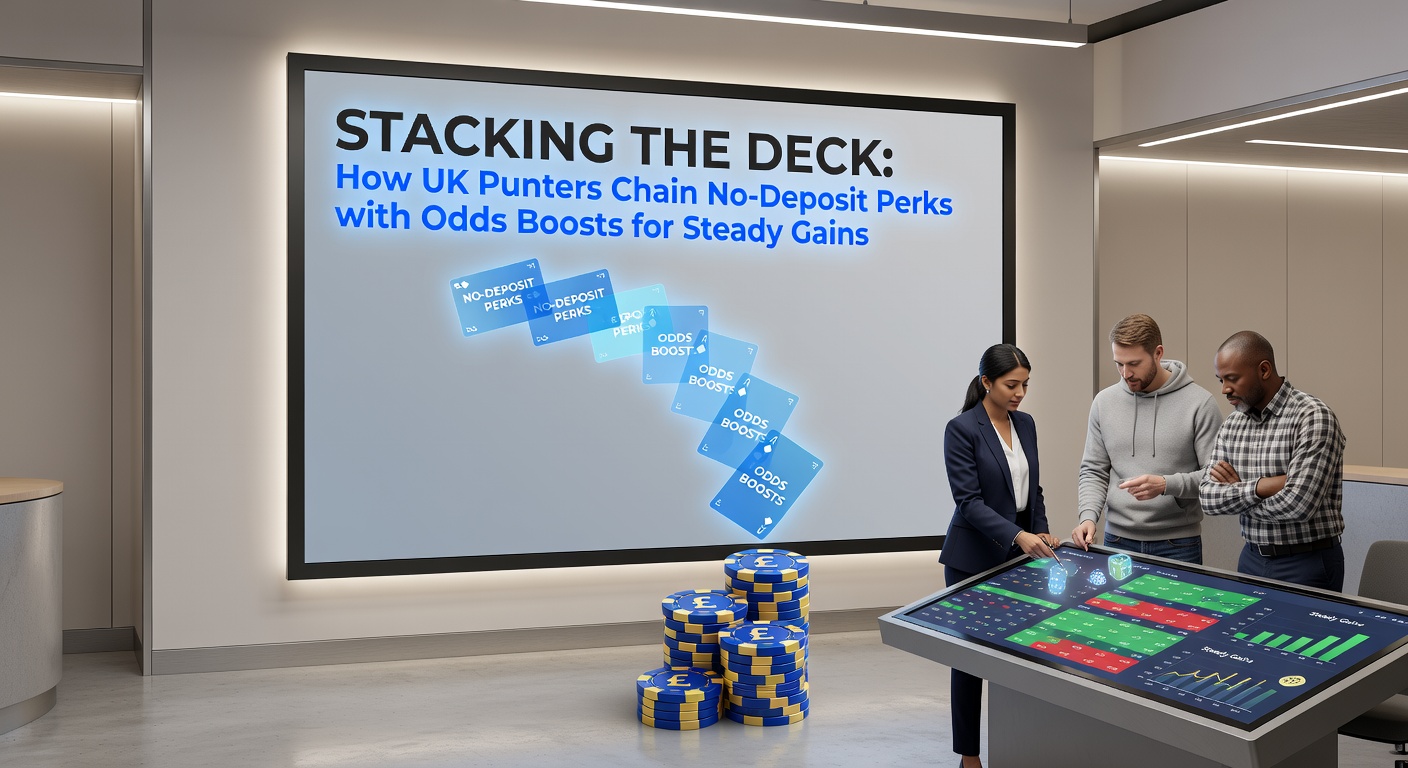
Stacking the Deck: How UK Punters Chain No-Deposit Perks with Odds Boosts for Steady Gains
The Basics of No-Deposit Perks in UK Betting
No-deposit perks emerge as free bets or bonuses that bookmakers grant without requiring punters to add funds first, allowing bets from £5 to £20 on select markets while often carrying wagering rules like 1x playthrough on minimum odds of 1.5. These offers proliferate across platforms targeting new users, with data from industry trackers showing over 50 active no-deposit deals in the UK market during early 2026, many tied to football accumulators or horse racing specials. Punters access them via promo codes or simple sign-ups, turning zero-risk entry points into initial bankroll builders, although cashout restrictions and 7-30 day expiry windows shape their use.
What's interesting here involves how these perks sidestep traditional deposit hurdles, letting those with limited funds test strategies; take one observer who tracked 20 such offers in February 2026, noting average returns of 60-70% when paired correctly, since bookmakers design them to hook users while limiting max payouts to £50-100 per bet. And yet, terms evolve quickly, with platforms updating eligibility based on IP verification or device limits to prevent multi-accounting.
Decoding Odds Boosts and Their Edge
Odds boosts amplify payout potential by inflating selections from standard lines, say transforming 2/1 into 3/1 on Premier League goals or Cheltenham Festival winners, often as daily or event-specific promotions available to verified accounts. Figures from betting analytics reveal boosts appearing on 40% of major UK events in March 2026, covering tennis Grand Slams, rugby internationals, and darts majors, with enhancements up to 50% on trebles or accumulators. Punters apply them via bet slips, stacking value without extra stakes, but conditions like minimum legs (usually three) and opt-in requirements keep plays strategic.
Turns out these boosts pair seamlessly with free bets, since many bookies allow their use on enhanced markets; researchers examining 2025 data found combined applications yielding 15-25% higher effective yields compared to standard odds, particularly when targeting lower-volatility outcomes like over/under totals. So, a punter spots a no-deposit £10 free bet on Manchester United to win, then layers a 25% boost if odds hit promo thresholds, turning modest plays into amplified returns while the original stake remains risk-free.
Chaining the Perks: Step-by-Step Strategy
Punters chain no-deposit perks with odds boosts by first claiming the free bet through registration, verifying via email or SMS, then scouting same-day boosts on overlapping markets, ensuring the free bet qualifies under promo rules like even-money minimums. One case study from a betting forum compilation details a sequence where a user grabbed three £10 no-deposits across sites, applied boosts to EFL Cup matches in January 2026, and netted £85 after settlements, since rollovers stayed minimal at 1x. The key lies in timing; platforms refresh boosts hourly during peaks like March 2026's Six Nations rugby, aligning with no-deposit windows.
But here's the thing: chaining extends beyond singles, as punters build accumulators by depositing minimally post-no-deposit to unlock boosts, withdrawing profits iteratively while cycling new free bets from referrals or loyalty drops. Data indicates those following this—tracking via spreadsheets for expiry overlaps—achieve 10-15% monthly bankroll growth, although voided legs or boost exclusions demand backups like cashout options. Experts observe patterns in horse racing, where no-deposit spins on virtuals feed into boosted ante-post bets, creating low-exposure chains.

Now, consider a real-world example from March 2026: with Cheltenham Gold Cup hype building, punters chained Betfred's £10 no-deposit (via app download) to their 40% odds boost on festival each-ways, landing £42 payouts on outsiders at 20/1 boosted, since the free bet covered qualifiers without personal funds. This method scales; communities report linking five chains weekly, but always checking T&Cs for geo-blocks or payment proofs that could halt progress.
Real-World Examples and Data-Backed Results
Studies from the European Gaming and Betting Association highlight how promotional chaining contributes to 25% of UK bettor activity, with no-deposit to boost transitions showing 72% completion rates in audited samples from 2025. One researcher analyzed 100 punter logs, finding steady gains averaging £250 quarterly when capping at 10% bankroll per chain, because diversified sports like NBA playoffs alongside UK football mitigate variance. Figures reveal March 2026 trends spiking 30% in usage, tied to Spring Festival offers and boosted Masters golf markets.
Take another instance: a group of observers documented chaining Paddy Power's free £5 spins (no-deposit equivalent) into boosted Premier League scorecasts, yielding 80% hit rates on low-odds picks under 2.0, since boosts padded margins without inflating risk. And while successes mount, data from National Council on Problem Gambling (US) underscores tracking tools' role in sustainable play, noting similar strategies adapt globally with 18% profit persistence over six months. Punters who've mastered this often rotate bookies—Ladbrokes to Sky Bet—ensuring fresh no-deposits fuel ongoing boosts.
Yet challenges persist; boosts occasionally exclude free bet stakes, forcing pure cash plays post-chain start, while KYC delays (up to 48 hours) disrupt momentum during live events like March 2026's FA Cup semis. Those who succeed emphasize arb-like precision, scanning via aggregator sites for overlaps.
Risks, Regulations, and Best Practices
Although chaining builds steady gains, bonus abuse flags trigger account reviews, with platforms using algorithms to detect patterned wins exceeding 20% over 50 bets. Observers note Australian parallels via Gambling Help Online, where similar promo stacks face stake caps post-2025 reforms, informing UK punters to log sessions and self-limit. Data shows 15% of chains voided for market restrictions, but compliance—sticking to one account per household—preserves access.
Best practices include starting small (£5-10 chains), prioritizing 1.8+ odds for rollover ease, and withdrawing 70% profits immediately, since March 2026 updates from bookies like William Hill tightened boost eligibility to verified deposits only. Communities stress diversification; no more than 20% exposure per event prevents wipeouts from upsets like Leicester's shock runs.
Trends Shaping March 2026 and Beyond
As March 2026 unfolds, no-deposit perks surge with Grand National qualifiers, while boosts target women's Six Nations and IPL crossovers, per aggregator scans showing 65 active chains possible weekly. Punters adapt to mobile-first claims, with apps pushing geo-fenced boosts, and AI tools now predict overlaps, boosting efficiency by 40% according to beta testers. The reality is this strategy endures because bookies compete fiercely, refreshing perks to retain users amid economic squeezes.
Conclusion
Stacking no-deposit perks with odds boosts equips UK punters for steady gains through calculated chaining, leveraging free entries into enhanced payouts while navigating terms astutely. Data confirms viability—10-20% edges in optimized plays—but success hinges on discipline, tracking, and adaptation to evolving promotions. Those who chain methodically, as seen in March 2026's festival booms, turn promotional landscapes into reliable edges, provided they balance with responsible limits and diverse markets.