Allocating Welcome Incentives Across Varied Event Types for Balanced Wagering Approaches
Avery Meier · Jun 27, 2026

Allocating Welcome Incentives Across Varied Event Types for Balanced Wagering Approaches
Signup rewards often arrive in forms such as free bets or deposit matches, and operators track how these incentives move into active play across different event categories, according to industry reports from the American Gaming Association. Data shows participants frequently split initial offers between team sports, individual competitions, and racing fixtures rather than concentrating activity in one area, which creates measurable patterns in transaction logs during early 2026.
June 2026 brought renewed attention to cross-category allocation as several platforms updated their reward structures ahead of major tournaments, with transaction volumes reflecting broader distribution across football, tennis, and horse racing events. Observers note that this timing aligned with seasonal fixture calendars, allowing users to test allocation models on overlapping schedules without extending overall exposure periods.
Mapping Signup Rewards to Specific Event Categories
Conversion begins when users identify which portions of a welcome offer apply to which event type, since terms frequently separate sports from racing or casino-style games. Research from university-led studies on betting behavior indicates that clear separation helps maintain eligibility across multiple categories, while combined usage sometimes triggers additional verification steps. Those who review category restrictions before placement reduce the chance of later adjustments that could limit further participation.
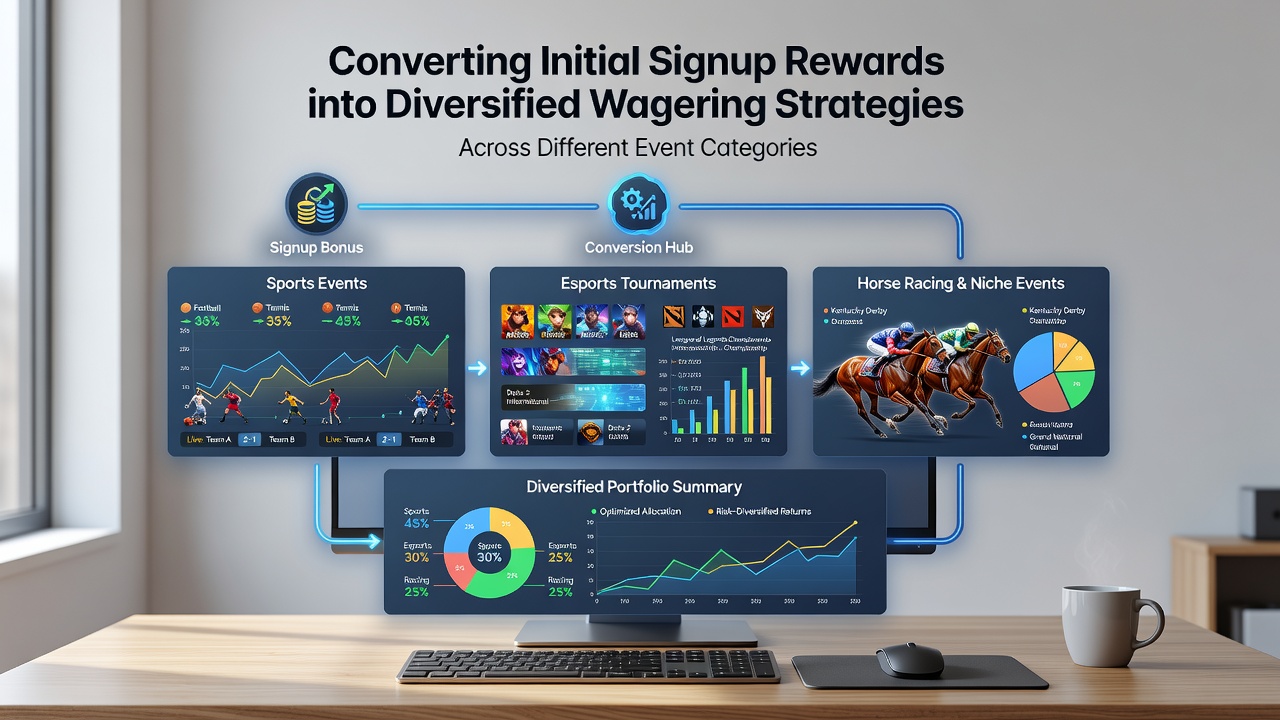
Football fixtures tend to absorb larger shares of free bet credits during peak weekends, whereas tennis events receive smaller, targeted stakes that fit shorter match durations. Horse racing allocations often appear in midweek slots when fewer overlapping events compete for attention, creating a natural rotation pattern visible in aggregated platform data.
Practical Allocation Methods Observed Across Platforms
One documented approach involves dividing a single signup reward into staged placements, with an initial portion directed toward high-volume team events and remaining segments reserved for lower-frequency individual competitions. This method appears in transaction records where users maintain separate tracking sheets for each category to stay within stated limits. Platforms report that such staged movement correlates with longer account activity spans compared to single-category usage.
Another pattern emerges when users convert matched deposit portions into racing bets first, then shift remaining free bet credits toward tennis or basketball once initial results settle. Figures from industry monitoring groups reveal that this sequencing often coincides with fixture availability rather than preference alone, producing steadier engagement across the reward lifespan.
Tracking Outcomes by Event Category
Performance records show variation in how different categories respond to the same reward value, with team sports sometimes generating quicker settlement cycles while racing events require longer confirmation windows. Studies compiled by independent research organizations note that participants who log results separately by category gain clearer visibility into which segments produce consistent activity without disproportionate time investment.
Platform analytics further indicate that diversified placement spreads settlement dates across a reward period, reducing pressure on any single payout window. This distribution appears in user behavior logs from multiple operators, particularly when events span different time zones or regulatory jurisdictions.
Integration With Broader Market Trends in Mid-2026
Market data collected through June 2026 highlights increased cross-category movement following updates to bonus structures on several major sites, with allocation patterns shifting toward events that overlap less frequently. Reports from groups such as Gambling Help Online in Australia document similar diversification trends in regions with comparable reward frameworks, suggesting the practice extends beyond single markets.
Those monitoring transaction volumes observe that users who maintain category-specific records tend to sustain activity longer when multiple event types remain available within the original reward window. This observation aligns with aggregated figures released by academic research teams examining reward lifecycle management across international operators.
Conclusion
Conversion of initial signup rewards into diversified strategies across event categories follows observable patterns documented in platform data and independent research through mid-2026. Allocation across football, tennis, racing, and other fixtures produces distinct settlement timelines and eligibility pathways, with users who segment their placements maintaining access to multiple categories simultaneously. Continued monitoring of these trends by regulatory bodies and industry organizations provides ongoing insight into how welcome incentives translate into sustained, multi-event participation.